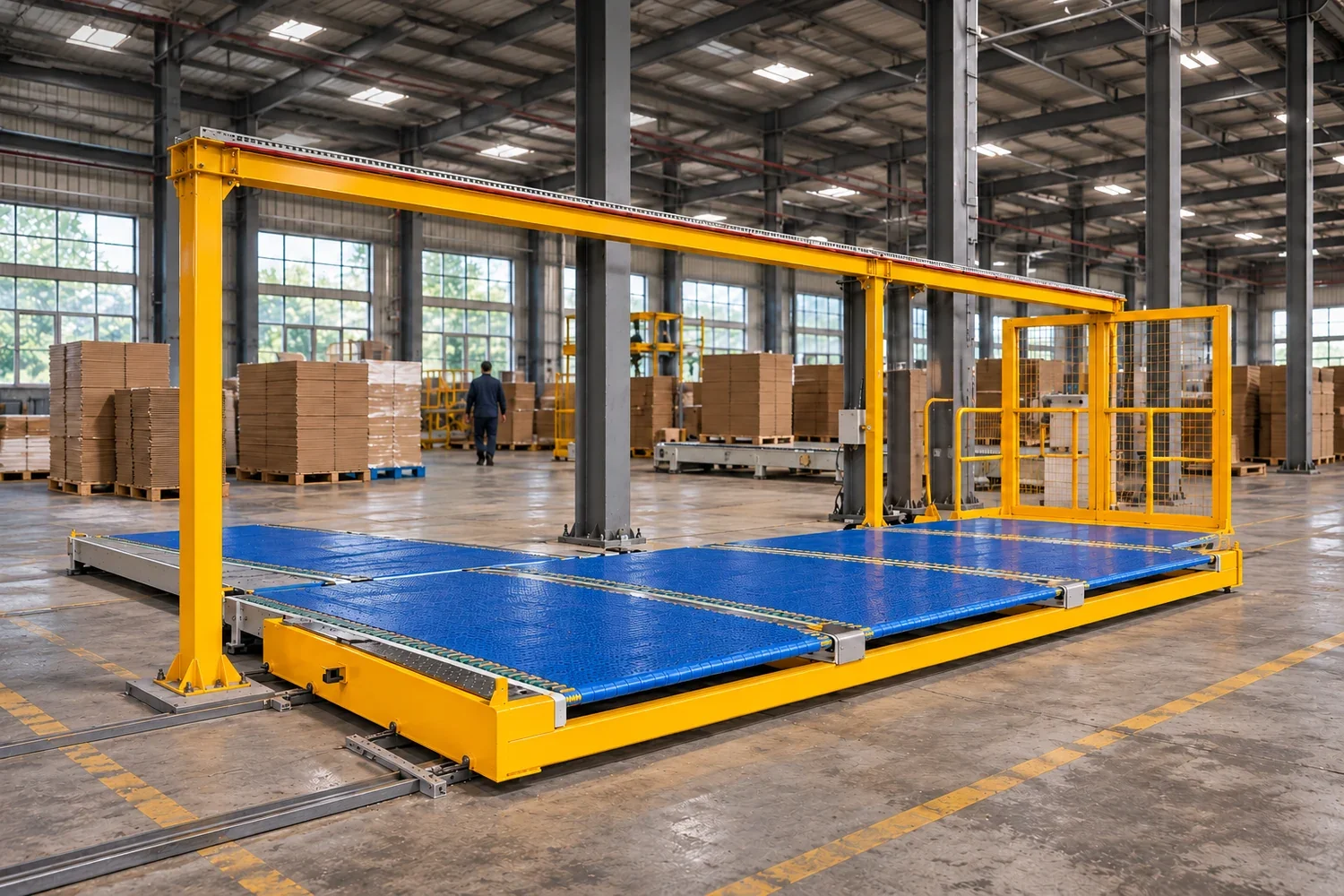
An environmentally focused packaging manufacturer wanted to improve conveying at the front of the dry end of its corrugated-board line. Boards had just left the hot plates, and the area was exposed to heat, steam and condensate. The existing rubber flat belt and metal support plates developed slipping, tracking and corrosion problems. The customer needed to move the boards reliably while improving drainage, cooling conditions and surface cleanliness.
Look beyond slipping to the conditions around the board
The original rubber belt relied on friction drive. In the hot, humid section, slipping and tracking problems disrupted the conveying rhythm. Beneath the belt, prolonged steam exposure corroded the metal support plates, creating a source of rust that could mark the board. Cleaning, replacement and damaged board all added work. The requirement therefore covered the condition of the conveyed product as well as the movement of the belt.
Pair an open carrying surface with positive drive
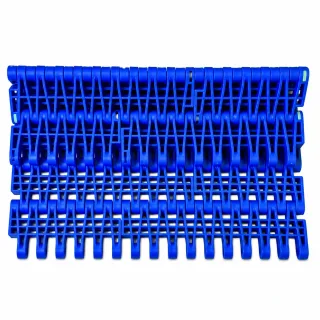
ALTABELT used an open-grid plastic modular belt and selected the material for the heat, steam and condensate in this section. Matching sprockets transmitted motion through engagement with the belt, addressing the dependence on friction drive. Support and guides were configured alongside the belt. The drive, carrying surface and surrounding equipment were addressed in the same upgrade.
Give air, condensate and paper debris a path through
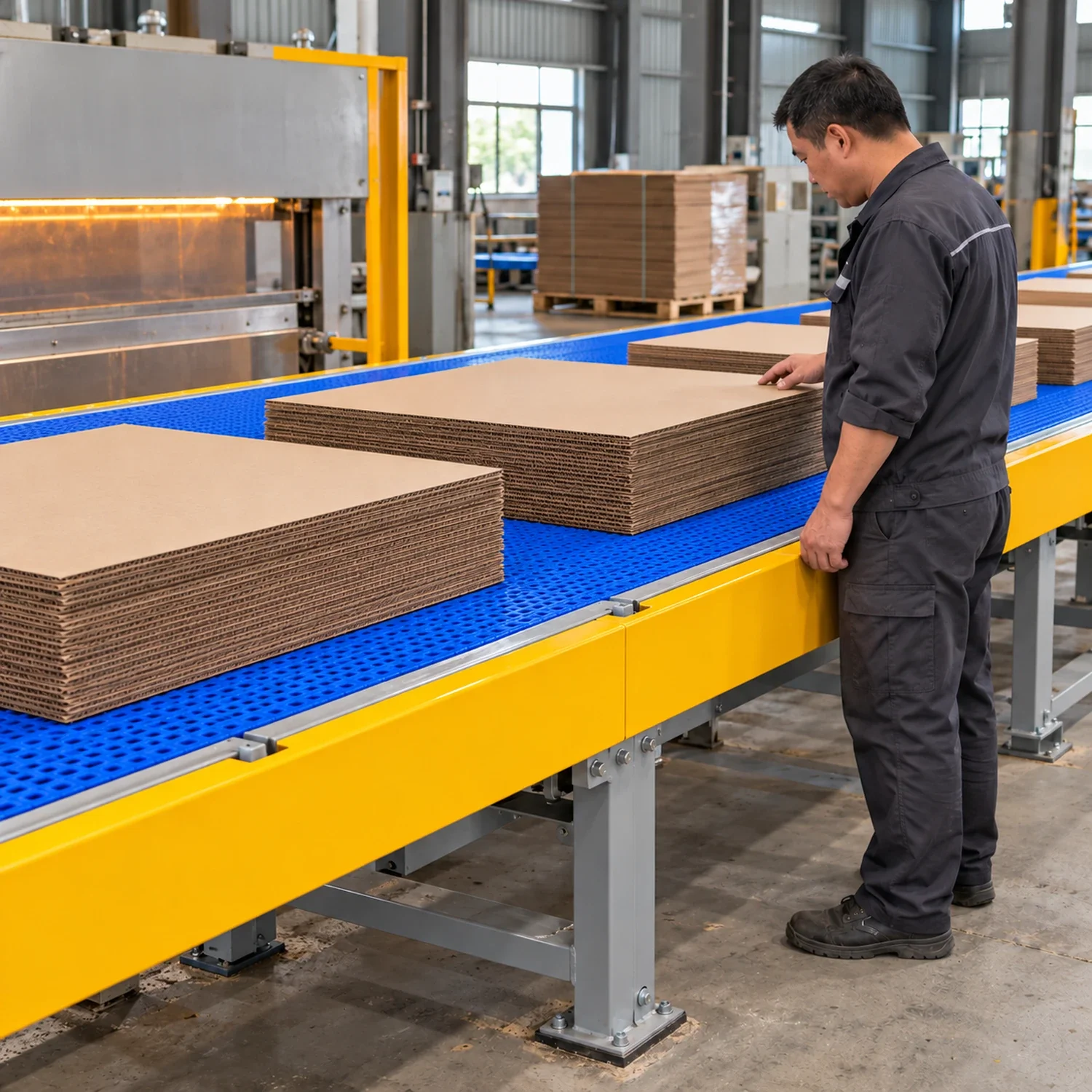
The perforated surface allowed air to pass through the belt and provided discharge paths for condensate and paper debris. That supported ventilation and cleaning after the hot plates. The plastic belt body also avoided the rusting associated with a metal carrying component. Openings alone were not the whole solution: the selected material, sprocket engagement and support arrangement all had to suit the conditions in which the board was being conveyed.
Turn a better match into longer replacement intervals
After the upgrade, slipping improved, condensate and paper debris were easier to discharge, and board-cooling conditions improved. The project achieved a threefold extension in belt service life, reducing disruption from frequent replacement. A more stable conveying process also made cleaning and maintenance easier to include in the production schedule. Reducing frictional slipping cut the associated wasted drive effort.
Product Refresh
| Area | Before | After |
|---|---|---|
| Conveying stability | Slipping and tracking problems | Sprocket drive improved slipping |
| Rust contamination | Corroded support affected board cleanliness | Non-rusting plastic belt body improved cleanliness |
| Drainage and cleaning | Condensate and debris accumulated | Open surface provided discharge paths |
| Belt service life | Aging and frequent replacement | Threefold extension in service life |
| Drive losses | Wasted effort from frictional slipping | Reduced losses associated with slipping |
| Cooling conditions | Closed surface retained heat | Open surface improved ventilation |
For a similar hot, humid conveying section, review the drive method, belt material, open area and support together. A coordinated configuration can address the production problem more completely than replacing the belt without reviewing its surroundings.
Discuss your conveying application with ALTABELT.